
Disclaimer: This article may contain affiliate links. As an Amazon Associate, we earn from qualifying purchases at no extra cost to you.
🌍 Note for International Readers: The images in this review feature the US (110V) model. However, our “Check Price” links are smartly geo-targeted. When you click, you will be automatically redirected to the correct local Amazon store (UK, CA, AU) showing the 220V/240V version with your correct local wall plugs.
When natural disasters and rolling blackouts strike, a small camping battery will not save your home. You need a massive, industrial-grade power system capable of running your central air conditioning, well pumps, and entire kitchen for days. For decades, noisy and toxic gas generators were the only solution. But in 2026, EcoFlow released a monster that changes everything.
If you are researching whole-home battery systems and looking for a brutally honest ecoflow delta pro ultra review, you are in the exact right place.
This brand-new system is a towering giant. It boasts a base capacity of 6kWh, pushes a staggering 7200W of continuous power, and natively supports 240V split-phase output. But with a highly premium price tag, is it actually capable of taking your entire house off the grid?
In this comprehensive 2026 ecoflow delta pro ultra review, we will analyze its raw specifications, test its extreme expandability, and decide if it is truly the ultimate home backup investment.
1. The Cheat Sheet: Pro Ultra Specs Explained
Before we dive into real-world home testing in this ecoflow delta pro ultra review, let’s look at the raw numbers. The spec sheet reveals an absolute off-grid titan.
| ⚙️ Feature | DELTA Pro Ultra Specs | 💡 What It Means For You |
| 🔋 Base Capacity | 6kWh (6144Wh) | Runs essential home circuits for 1-2 days standalone. |
| ⚡ AC Output | 7200W (10.8kW Surge) | Easily starts 3-ton central ACs and heavy well pumps. |
| 🔌 Native 240V | Yes (Built-in) | Powers heavy 240V appliances without extra voltage hubs. |
| 📈 Expandability | Up to 90kWh | Scale up to run your entire house for a full month. |
| 🧪 Battery Type | LiFePO4 (LFP) | Lasts 3,500+ cycles (10+ years of daily home use). |
Curious how this compares to standard portable units? Check out our basic reality check: What Can a 2000W Portable Power Station Run?
2. Massive Output: 7200W and Native 240V Power
The most defining feature we must highlight in this ecoflow delta pro ultra review is the sheer force of its inverter.
- The 7200W Advantage: Most high-end portable stations max out at 3000W. The DELTA Pro Ultra pushes an unbelievable 7200W continuously. This means you can run an electric clothes dryer, an oven, and a refrigerator at the exact same time without the system crashing.
- Native 240V Power: Older systems required you to buy two separate machines and a messy adapter cable to get 240V power. This unit delivers 120V and 240V natively from a single inverter, allowing you to directly plug in an RV or charge a Tesla with ease.
3. Insane Expandability (Scaling to 90kWh)
If you want a system that grows with your family, this ecoflow delta pro ultra review proves that EcoFlow is miles ahead of the competition.
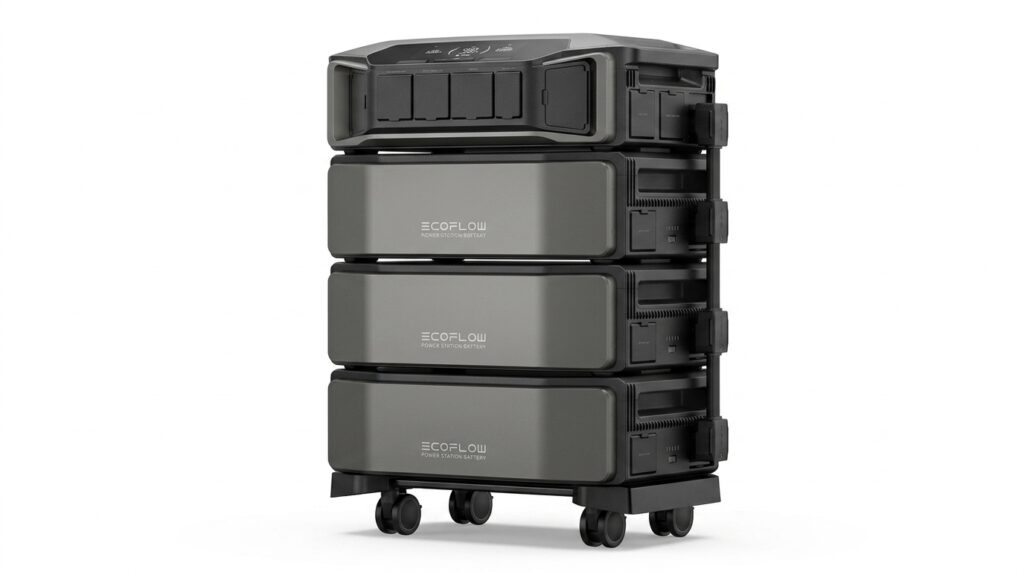
- Modular Stacking: The system is modular. The base unit holds 6kWh, but you can stack up to five battery packs under a single inverter, reaching 30kWh.
- The 90kWh Limit: If you want total grid independence, you can link three complete systems (three inverters and fifteen batteries) together via the EcoFlow Smart Home Panel 2. This creates a staggering 90kWh of power—enough to run a standard American home completely off-grid for weeks.
- Safety Chemistry: According to authoritative chemical research (Wikipedia), the LiFePO4 battery cells used in these packs are immune to thermal runaway, making it 100% safe to stack this massive energy storage system inside your home garage.
4. Smart Home Panel 2 Integration
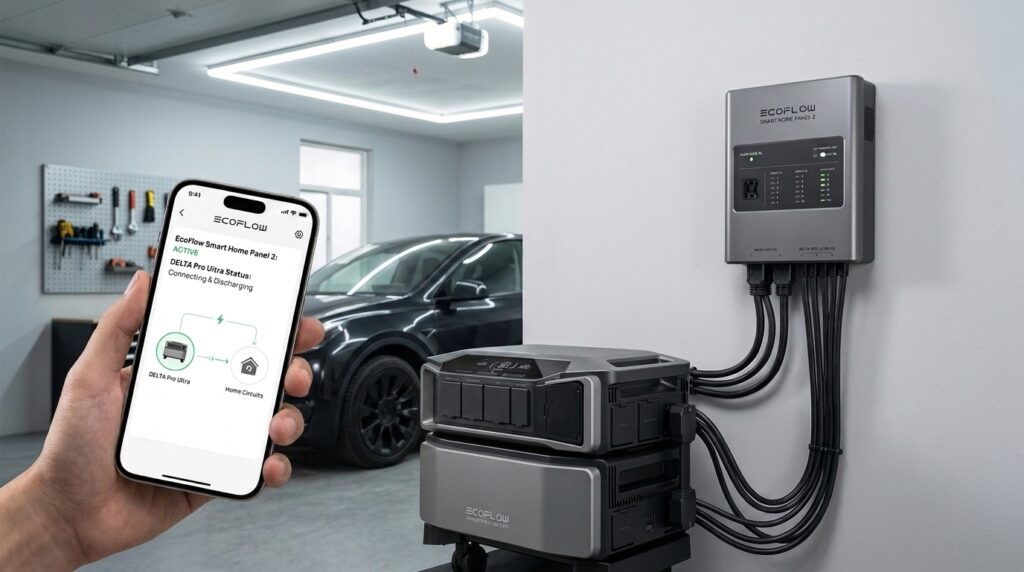
A major reason why this unit dominates every ecoflow delta pro ultra review online is how seamlessly it integrates into your existing home wiring.
- Auto-Switchover: By installing the EcoFlow Smart Home Panel 2, you can wire the Pro Ultra directly into your home’s circuit breakers. If a winter storm knocks out the grid while you are sleeping, the system automatically switches your entire house to battery power within 20 milliseconds. Your lights won’t even flicker.
- Solar Charging: The unit accepts a massive 5.6kW of solar input natively. You can connect heavy-duty rigid roof panels to the system, allowing the sun to run your house and recharge the massive batteries simultaneously during the day.
Final Verdict: Is It The Ultimate Investment?
To conclude our comprehensive 2026 ecoflow delta pro ultra review, we can definitively say that EcoFlow has built the ultimate gas generator replacement.
While the upfront cost is a premium investment, the silent operation, native 240V 7200W output, and mind-blowing 90kWh expandability make it a permanent solution for home security. You will never have to buy gasoline, change oil, or worry about carbon monoxide poisoning again.
Because of this unparalleled performance, this unit sits at the very top of our industry rankings. Want to see how it compares against Anker and BLUETTI’s massive home systems? Read our definitive showdown here:
👉 3 Best Whole Home Battery Backup Systems (2026): Say Goodbye to Gas
FAQ
Is the system featured in this ecoflow delta pro ultra review portable?
While it is technically on wheels, it is not “portable” in the camping sense. The inverter and a single battery weigh close to 180 lbs combined. It is designed to be rolled into your garage or utility room and left there as a permanent or semi-permanent home backup solution.
Can I charge my electric vehicle (EV) with it?
Yes. A major positive in our ecoflow delta pro ultra review testing is the native 240V output. You can plug a standard Level 2 EV charging cable directly into the unit to give your Tesla or other electric vehicle crucial emergency miles during a blackout.
Do I need an electrician to install it?
If you only plan to plug appliances directly into the front of the unit using extension cords, no electrician is required. However, if you want to wire it directly into your house using a Transfer Switch or the Smart Home Panel 2, you must hire a licensed electrician.