
Disclaimer: This article may contain affiliate links. As an Amazon Associate, we earn from qualifying purchases at no extra cost to you.
If you are comparing the EcoFlow DELTA 2 Max vs Jackery 2000 Plus, you are no longer just looking for a weekend camping gadget. You are searching for a serious 2kWh powerhouse capable of running home appliances during blackouts or sustaining an off-grid RV for days.
In 2026, the two undisputed heavyweights in this class are the EcoFlow DELTA 2 Max and the Jackery Explorer 2000 Plus.
Both brands have recently ditched older battery technologies in favor of ultra-durable LiFePO4 (LFP) cells. Both offer massive AC outputs and extreme solar charging capabilities. But which one deserves your hard-earned money?
In this head-to-head battle—EcoFlow DELTA 2 Max vs Jackery 2000 Plus—we break down the specs, the real-world performance, and the hidden catches to help you make the smartest investment.
1. The Cheat Sheet: 2kWh Specs Compared
Before diving into the details of the EcoFlow DELTA 2 Max vs Jackery 2000 Plus comparison, let’s look at the raw numbers. Here is exactly how these two titans stack up.
| Feature | EcoFlow DELTA 2 Max | Jackery Explorer 2000 Plus |
| Capacity | 2048Wh | 2042Wh |
| Battery Chemistry | LiFePO4 (3,000+ cycles) | LiFePO4 (4,000+ cycles) |
| AC Output (Running) | 2400W (Surge 4800W) | 3000W (Surge 6000W) |
| Max Solar Input | 1000W | 1200W |
| Expandability | Up to 6144Wh | Up to 24,000Wh |
| Weight | 50 lbs (23 kg) | 61.5 lbs (27.9 kg) |
Want to know exactly what a 2000W unit can handle? Read our reality check:What Can a 2000W Portable Power Station Run?
2. Power Output: Who Can Run More Appliances?
When comparing the EcoFlow DELTA 2 Max vs Jackery 2000 Plus, output power is the biggest deciding factor for heavy-duty users.
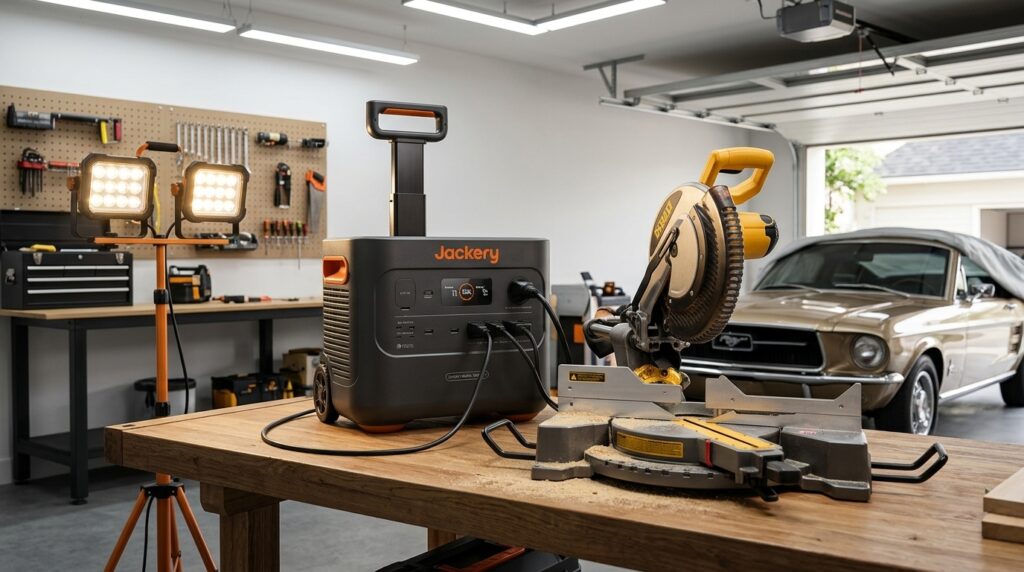
- The Jackery 2000 Plus Advantage: Jackery takes the crown for pure, raw output. With a massive 3000W running wattage and a 6000W surge, it can effortlessly start power-hungry tools like air conditioners, well pumps, or heavy RV microwaves without breaking a sweat.
- The EcoFlow DELTA 2 Max Advantage: EcoFlow outputs 2400W natively. However, it features EcoFlow’s proprietary X-Boost technology. If you plug in a heater that requires 3400W, the DELTA 2 Max won’t shut down; it will intelligently lower the voltage to run the appliance safely.
Verdict: If you need to run multiple heavy appliances simultaneously (like an AC unit and a microwave), the Jackery 2000 Plus wins the pure output battle.
3. Portability and Design: Suitcase vs. Block
In the EcoFlow DELTA 2 Max vs Jackery 2000 Plus portability debate, both 2kWh batteries are inherently heavy, but the two brands took very different approaches to mobility.
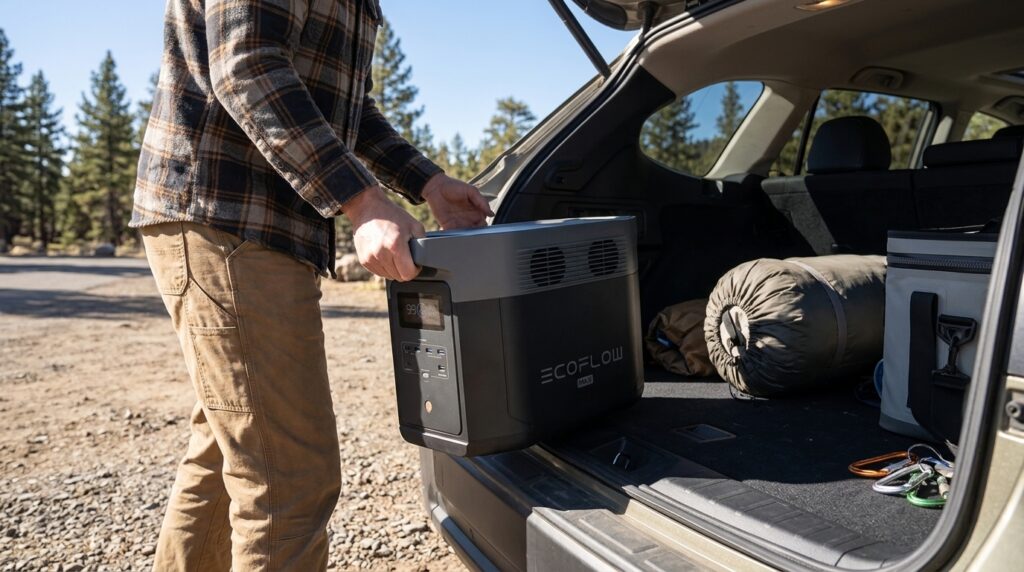
- EcoFlow DELTA 2 Max: Weighing only 50 lbs, the DELTA 2 Max is astonishingly light for a 2048Wh unit. It features two sturdy top handles, making it relatively easy for one fit person (or two people) to lift into the trunk of an SUV.
- Jackery 2000 Plus: At 61.5 lbs, the Jackery is a beast to lift. However, Jackery brilliantly designed it like a premium piece of luggage. It features built-in wheels and a telescopic aluminum handle. You don’t have to carry it; you just roll it.
Verdict: If you are navigating flat surfaces (homes, paved campsites), the rolling Jackery is easier to handle. If you need to lift the unit frequently into a truck bed or carry it over rocky terrain, the lighter EcoFlow wins.
4. Solar Charging & Expandability
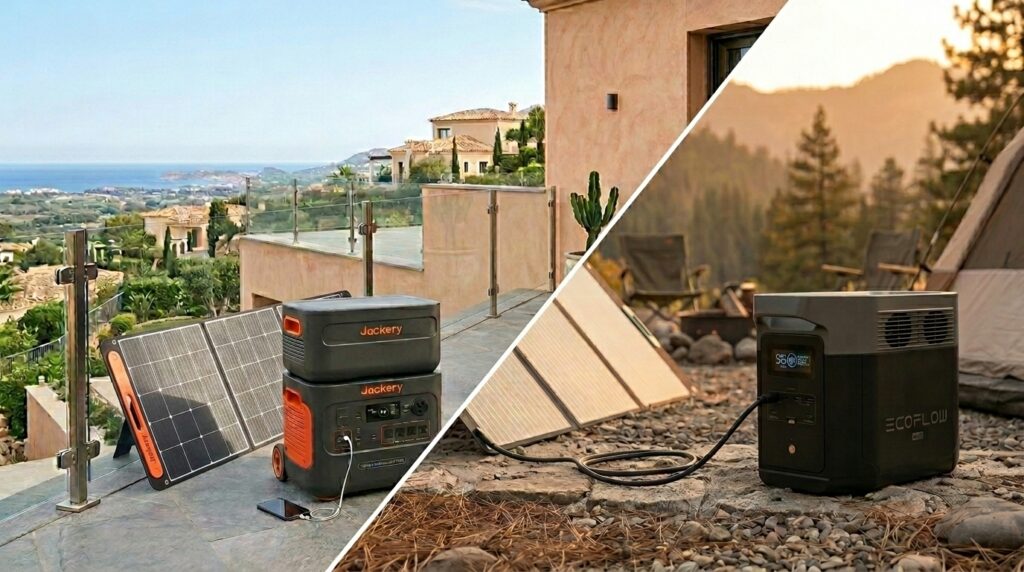
When evaluating the EcoFlow DELTA 2 Max vs Jackery 2000 Plus for off-grid living, both units are designed to be the heart of a massive solar system.
- Solar Input: The EcoFlow accepts up to 1000W of solar, while the Jackery edges it out with 1200W. Both can fully recharge from the sun in under 2.5 hours using maximum panels.
- Home Backup Expansion: Here is where the differences become extreme. The EcoFlow DELTA 2 Max can add up to two extra batteries, capping at about 6kWh. The Jackery 2000 Plus, however, is an absolute monster. You can connect up to five extra battery packs and even link two main units together to reach a staggering 24,000Wh (24kWh)—enough to run an entire house for days.
Need panels for your setup? Check out our top picks: 6 Best Portable Solar Panels for Camping in 2026
Final Verdict: Which 2kWh Beast Should You Buy?
Choosing a winner in the EcoFlow DELTA 2 Max vs Jackery 2000 Plus debate comes down to how you plan to use it.
Buy the Jackery Explorer 2000 Plus if: You want the ultimate scalable home backup system. With its 3000W output, 1200W solar input, and massive 24kWh expandability, it is a future-proof investment. The built-in wheels make it incredibly convenient for rolling around the house or garage during a power outage.
Buy the EcoFlow DELTA 2 Max if: You value weight and app control. At only 50 lbs, it is the best 2kWh unit for RVers and campers who need to lift their gear frequently. It recharges blazingly fast and utilizes the incredibly polished EcoFlow app for smart energy management.
Not ready for a 2000W unit? See how their smaller 1000W siblings compare:Jackery 1000 v2 vs. EcoFlow DELTA 2: The Honest 1kWh Showdown.
FAQ
Q: Can I use the EcoFlow DELTA 2 Max or Jackery 2000 Plus as a UPS?
A: Yes. Both units offer EPS (Emergency Power Supply) features. If you leave them plugged into the wall with devices attached, they will automatically switch to battery power within 20-30 milliseconds during a blackout, keeping your CPAPs or computers running.
Q: Are the EcoFlow DELTA 2 Max vs Jackery 2000 Plus batteries safe to use indoors?
A: Absolutely. Both use LiFePO4 (LFP) battery chemistry, which is the safest on the market in 2026. They emit zero fumes and operate silently, making them perfectly safe to use inside your living room or bedroom.