
Disclaimer: This article may contain affiliate links. As an Amazon Associate, we earn from qualifying purchases at no extra cost to you.
You are out in the wild, the sun is shining, but your portable power station reads “0 Watts.” You reset the battery, you clean the solar panels, and still… nothing.
In 90% of these cases, the power station isn’t broken. The cable is.
Solar adapter cables get twisted, stepped on, and left in the rain. Finding the right replacement cables for EcoFlow and Jackery can save your entire camping trip, but buying the wrong cheap wire can actually melt your battery’s input port.
In this 2026 guide, we break down exactly which cords you need to buy to replace your lost or broken chargers safely.
1. The 10-Second Cable Finder (Cheat Sheet)
Don’t want to read the technical specs? Use this quick table to find the exact replacement wire you need for your specific brand.
If you are tired of searching through confusing technical forums, this guide will help you find the exact replacement cables for ecoflow and jackery to get your gear running again.
| What You Need to Do | EcoFlow (RIVER / DELTA) | Jackery (Explorer) |
| Connect a Solar Panel | MC4 to XT60i Cable | MC4 to 8mm (DC7909) |
| Charge from a Car 12V | Car Port to XT60i | Car Port to 8mm |
| Charge from a Wall Outlet | Standard C13 AC Cable | AC Brick Power Supply |
Wiring Mix-up? If you are just trying to connect a different brand of solar panel to your battery, read our dedicated tutorial: How to Connect a Solar Panel to a Portable Power Station.
2. Best Replacement Cables for EcoFlow
When shopping for replacement cables for ecoflow and jackery, you must treat EcoFlow differently because of its high-speed X-Stream technology.
EcoFlow devices (like the RIVER 2 and DELTA 2) are famous for their fast charging. Because they pull massive amounts of power, you cannot use cheap, thin wires.
The Solar Cable (MC4 to XT60i)
EcoFlow upgraded their ports from standard XT60 to XT60i. The “i” stands for intelligent; it has a third middle pin that tells the battery it is connected to solar, allowing it to pull more amps.
- The Fix: Always buy an official or highly-rated third-party MC4 to XT60i cable. If you use a regular XT60, your EcoFlow will charge, but at a much slower speed (usually capped at 8 Amps).
The AC Wall Cable (C13)
Did you lose the cord that plugs into the wall? You are in luck. EcoFlow uses a standard C13 Power Cord (the exact same cord used for desktop computers and monitors). You probably have three of these sitting in a drawer at home!
Troubleshooting: If you bought a new cable and the screen still says 0 Watts, your battery’s computer might be locked. See our repair guide: EcoFlow Not Charging? 5 Common Fixes.
3. Best Replacement Cables for Jackery
Unlike EcoFlow, finding replacement cables for ecoflow and jackery models requires you to look for a specific 8mm barrel connector.
Jackery uses a circular barrel connector known as the 8mm or DC7909. These pins are fragile and easily bent if you trip over the cord.
The Solar Cable (MC4 to 8mm)
If your original Jackery SolarSaga panel cable ripped, or you want to use a cheaper Renogy panel with your Jackery 1000 v2, you need an adapter.
- The Fix: Buy an MC4 to 8mm (DC7909) cable. Make sure the 8mm tip has a secure, snug fit, as loose barrel connectors generate heat and can melt the plastic port.
The Car Charger (12V to 8mm)
Lost the car charger? Replacing this is easy. Just ensure the replacement has a built-in fuse inside the 12V cigarette lighter plug to protect your Jackery from car alternator surges.
Dead Battery? If your new cord doesn’t fix the issue, you might need a BMS reset. Read our step-by-step guide: Why Is My Jackery Not Charging?.
4. Why Cheap Cables Ruin Your Battery (AWG Rule)
When shopping for replacement cables for EcoFlow and Jackery, you will see options ranging from $9 to $40. Why the difference? It comes down to AWG (American Wire Gauge).
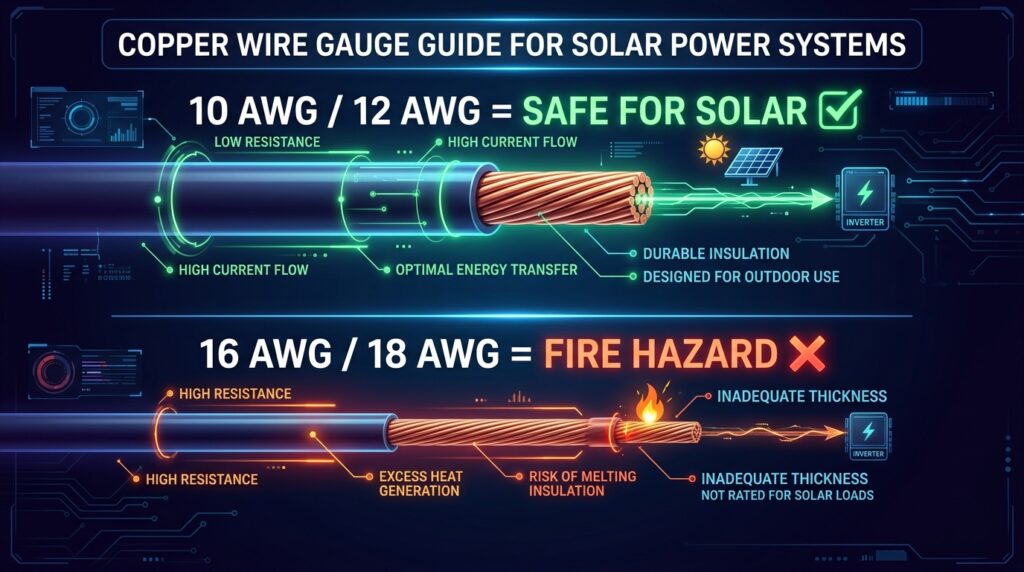
According to the American Wire Gauge standards, the lower the AWG number, the thicker the copper wire.
- 12 AWG or 10 AWG: Thick copper. Safe for solar panels pulling 200W+. (Buy these).
- 16 AWG or 18 AWG: Thin copper. Good for charging a phone, but will overheat and potentially melt if you push 200W of solar power through them. (Avoid these).
Final Verdict: Keep a Spare in Your Kit
A broken cable shouldn’t ruin your off-grid trip. Because these wires are relatively cheap, we highly recommend keeping spare replacement cables for EcoFlow and Jackery in your RV or camping bin.
If you are realizing that your entire solar panel is deeply degraded and a cable won’t fix it, it might be time for an upgrade. Check out our latest tests: 5 Best Portable Solar Panels for Camping.
FAQ
Q: Are XT60 and XT60i cables interchangeable?
A: You can plug a standard XT60 into an EcoFlow XT60i port, and it will work. However, the EcoFlow will limit the charging speed to 8 Amps to protect the system. For maximum charging speed, always use an XT60i cable.
Q: Can I splice and fix a broken solar cable with electrical tape?
A: No. Solar panels push high DC voltage. Splicing a broken wire with tape creates high resistance, which causes massive heat and is a severe fire hazard. Always buy a proper replacement cable.
Q: What is the maximum length for a solar extension cable?
A: Try to keep your cables under 30 feet (10 meters). The longer the cable, the more “voltage drop” occurs, meaning less power reaches your power station. If you need a long cable, you must buy a thicker 10 AWG wire.
Q: Where is the best place to buy replacement cables for ecoflow and jackery?
A: We highly recommend buying replacement cables for ecoflow and jackery from certified Amazon sellers, as they offer easy returns if the connector doesn’t fit your specific power station model perfectly.